
How to Tell If Mould in Your Home Is Toxic or Harmless
Mould growth inside a home is more than just an unpleasant sight. It often raises immediate concerns about health, safety, and whether urgent action is needed. One of the most common questions homeowners ask is whether the mould they see is toxic or relatively harmless.
The truth is that while not all mould is equally dangerous, no indoor mould should be ignored. Some types are more likely to affect health and spread aggressively, while others remain mostly surface-level. Understanding the difference is essential for protecting both your property and wellbeing.
What Is Mould and Why Does It Grow Indoors?
Mould is a naturally occurring type of fungus that spreads through microscopic airborne spores. These spores are present in both indoor and outdoor air, but they only become a problem when they land on damp surfaces and begin to grow.
Inside homes and buildings, mould thrives when three key conditions are present: moisture, warmth, and a food source such as wood, plasterboard, or dust. Once established, it can spread rapidly and become difficult to control without addressing the underlying cause.
Main causes of indoor mould growth include:
- Excess humidity in bathrooms, kitchens, and laundry areas
- Poor ventilation in enclosed or sealed rooms
- Water leaks from pipes, roofs, or window frames
- Condensation forming on cold surfaces such as windows and external walls
- Flooding events or previous water damage that has not been fully dried
Once mould takes hold, it can spread beyond visible surfaces, penetrating wallpaper, plaster, fabrics, and even hidden structural cavities. This is why early identification is critical.
Toxic vs Harmless Mould: What’s the Difference?
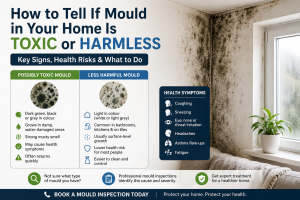
The phrase “toxic mould” is widely used, but it is not a strict scientific category. Instead, it generally refers to certain mould species capable of producing mycotoxins, which may pose health risks depending on exposure levels and individual sensitivity.
However, all indoor mould should be treated seriously, as even less aggressive species can still trigger irritation and respiratory issues.
Common household mould types include:
- Cladosporium – Frequently found on fabrics, carpets, and wooden surfaces. It is generally considered less harmful but can still act as an irritant.
- Penicillium – Often associated with water-damaged materials. It spreads easily through airborne spores and can contribute to poor indoor air quality.
- Aspergillus – A broad group of species, some of which are harmless while others may cause respiratory problems, particularly in damp environments.
- Stachybotrys chartarum (black mould) – Often referred to as “toxic black mould”, this species is commonly linked with long-term damp conditions and cellulose-rich materials such as plasterboard and wallpaper.
It is important to understand that visual identification is not reliable. Many mould types appear similar, meaning laboratory testing or professional mould inspection is often required for accurate identification.
Key Signs the Mould in Your Home May Be Toxic or High-Risk
Although you cannot confirm toxicity by appearance alone, certain warning signs may indicate a more serious mould problem that requires prompt attention.
1. Persistent musty or earthy odour
A strong damp smell often suggests hidden mould growth behind walls, under flooring, or within ceiling voids. This is one of the earliest indicators of widespread contamination.
2. Dark, spreading patches
Green, grey, or black mould that expands quickly across surfaces may indicate an active moisture source feeding ongoing growth.
3. Mould returning after cleaning
If mould reappears shortly after cleaning, the issue is likely deeper than the surface. This usually indicates unresolved moisture or ventilation problems.
4. Health symptoms in occupants
Exposure to airborne spores may contribute to:
- Ongoing coughing or sneezing
- Irritated eyes, nose, or throat
- Headaches or persistent fatigue
- Worsening asthma or breathing difficulties
These symptoms can become more noticeable in poorly ventilated rooms or during prolonged exposure.
5. Damp or damaged building materials
Materials such as plasterboard, wallpaper, and untreated wood that remain damp for long periods create ideal conditions for more aggressive mould growth.
Signs the Mould May Be Less Severe
Not all mould growth indicates a major structural issue, but even minor cases should still be addressed.
Typically lower-risk mould includes:
- Small patches forming in bathroom corners
- Light surface growth on tiles or silicone seals
- Localised mould in areas with high condensation, such as windows
While these cases are often easier to treat, they can escalate quickly if moisture conditions are not corrected.
Why You Should Never Rely on Appearance Alone
One of the most common misconceptions is that mould colour determines its danger level. In reality, appearance is not a reliable indicator of toxicity or risk.
- Black mould is not always the most hazardous type
- Light-coloured mould can still trigger allergic reactions
- Multiple species can appear visually identical
This uncertainty is why professional assessment is often the most accurate way to understand the severity of an infestation.
Health Risks Linked to Indoor Mould Exposure
Exposure to mould spores affects individuals differently depending on health status, duration of exposure, and indoor air quality.
Potential health impacts include:
- Allergic reactions such as sneezing, watery eyes, and skin irritation
- Asthma flare-ups and breathing difficulties
- Chronic sinus congestion
- Headaches and general fatigue
- Respiratory discomfort or chest tightness
In environments with ongoing damp conditions, prolonged exposure can significantly reduce indoor air quality and overall comfort.
When DIY Cleaning Is Not Enough
Small, surface-level mould patches can sometimes be removed using household cleaning products, but this is often a temporary solution rather than a permanent fix.
DIY cleaning becomes ineffective when:
- Mould keeps reappearing in the same areas
- Growth spreads across multiple rooms or surfaces
- There is a persistent damp smell in the property
- The moisture source cannot be identified
- Large or hidden areas are affected
In these situations, surface cleaning only addresses the symptom, not the underlying cause.
Professional Mould Removal: Why It Makes a Difference
Professional mould treatment focuses on both eradication and prevention, rather than simply removing visible growth.
A comprehensive service typically includes:
- Identification of underlying moisture sources
- Deep cleaning of affected and surrounding areas
- Safe removal of spores to reduce airborne contamination
- Treatment of hidden or hard-to-reach mould growth
- Practical advice for long-term moisture control and prevention
This approach significantly reduces the likelihood of recurrence and helps restore healthier indoor air conditions.
How to Prevent Mould Returning
Once mould has been treated, prevention becomes essential to avoid future outbreaks.
Effective prevention strategies include:
- Improving ventilation in bathrooms, kitchens, and utility spaces
- Using extractor fans consistently during and after moisture-producing activities
- Repairing leaks promptly to prevent hidden damp buildup
- Maintaining balanced indoor humidity levels
- Avoiding drying clothes indoors where possible
- Ensuring air circulation behind furniture and in corners
Consistent moisture management is the most effective long-term defence against recurring mould growth.
FAQs: Toxic and Harmless Mould in Homes
Can I tell if mould is toxic just by looking at it?
No. Visual appearance alone is not a reliable method for identifying mould type or toxicity.
Is black mould always dangerous?
Not necessarily, but it is commonly associated with damp conditions that can impact health and should always be treated seriously.
Can mould exposure make you ill?
Yes. It may cause allergic reactions, respiratory irritation, and worsen existing conditions such as asthma.
Will bleach kill mould permanently?
Bleach may remove surface staining, but it often does not eliminate spores embedded within porous materials.
When should I call a professional?
If mould is spreading, returning, or linked to ongoing damp issues, professional inspection and treatment are strongly recommended.
Final Thoughts
Determining whether mould is toxic or harmless is rarely straightforward. Appearance alone is not enough, and the real concern lies in moisture levels, spread rate, and indoor air quality impact.
Left untreated, mould can penetrate deeper into building materials and become increasingly difficult to remove effectively.
Need Expert Help with Mould in Your Home?
If you are dealing with recurring mould, damp smells, or persistent growth, professional treatment can provide a long-term solution rather than temporary surface cleaning.
Book a professional mould inspection today to identify the cause, safely remove contamination, and restore a healthier indoor environment.