What Causes the Mildew Smell?
The mildew smell is caused by microbial volatile organic compounds (MVOCs). These are gases released by mould and mildew as they grow in damp environments.
In simple terms, the smell comes from:
- Active or hidden fungal growth
- Moisture trapped in porous materials
- Poor ventilation preventing drying
- Organic materials breaking down in damp conditions
Even if mildew is no longer visible, the smell can remain if spores or moisture are still present.
Why Mildew Smell Is So Hard to Remove
Mildew odour is difficult to eliminate because it penetrates deep into porous materials such as:
- Plaster and drywall
- Upholstery and soft furnishings
- Carpets and underlay
- Curtains and fabrics
- Wooden surfaces
Surface cleaning alone is often not enough, because the smell originates beneath the visible layer.
Step 1: Identify the Source of the Smell
Before treating the odour, you need to locate where it is coming from.
Common hidden sources include:
- Damp walls behind furniture
- Window frames with condensation
- Under carpets or rugs
- Inside cupboards or wardrobes
- Fabric items stored in humid rooms
- Bathrooms with poor ventilation
A mildew smell often travels, so the source may not always be obvious.
Step 2: Remove Moisture First (Most Important Step)
Odour cannot be permanently removed while moisture remains.
How to reduce moisture:
- Open windows daily for airflow
- Use extractor fans in kitchens and bathrooms
- Run a dehumidifier in affected rooms
- Avoid drying clothes indoors
- Improve ventilation behind furniture
Without drying the environment, the smell will return quickly.
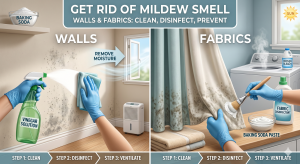
Step 3: Treat Mildew Smell in Walls
Walls are one of the most common sources of persistent musty odours.
Effective wall treatment steps:
- Wash affected areas with a mild cleaning solution
- Allow walls to dry completely (this is essential)
- Improve airflow in the room for several hours or days
- If smell persists, moisture may still be trapped inside plaster
In some cases, repainting without resolving moisture will only temporarily mask the smell.
Step 4: Remove Mildew Smell from Fabrics
Fabrics absorb moisture and odours easily, making them a major source of lingering smell.
Common affected items:
- Curtains
- Upholstery
- Cushions
- Bedding
- Clothing stored in damp areas
Treatment methods:
- Wash fabrics at the highest safe temperature
- Air dry outdoors where possible
- Use extended drying times in well-ventilated spaces
- Avoid storing fabrics in enclosed humid rooms
If fabrics remain damp for long periods, odour will persist or return.
Step 5: Eliminate Smell from Carpets and Soft Furnishings
Carpets and underlay can trap moisture deep within fibres.
Practical steps:
- Vacuum thoroughly to remove surface particles
- Increase room ventilation for several days
- Use a dehumidifier to draw moisture out
- Lift rugs to allow airflow underneath
- Consider professional deep cleaning if smell persists
In severe cases, underlay may retain moisture and continue producing odour even after cleaning.
Step 6: Improve Ventilation to Prevent Odour Returning
Without proper airflow, mildew smell will often return even after treatment.
Improve ventilation by:
- Opening windows regularly, even in colder months
- Running extractor fans for at least 20–30 minutes after moisture use
- Keeping doors open between rooms to allow air circulation
- Ensuring vents are not blocked or sealed
Air movement is essential to fully remove trapped odours.
Step 7: Use Odour Neutralisation (Not Just Fragrance)
Masking the smell with air fresheners does not solve the problem.
Instead, focus on neutralising odours by:
- Ensuring complete drying of materials
- Increasing airflow in affected rooms
- Removing moisture sources
- Cleaning porous materials thoroughly
True odour removal comes from eliminating the cause, not covering it.
Step 8: Check for Hidden Damp Problems
If mildew smell keeps returning, there may be a deeper moisture issue.
Warning signs include:
- Smell returns after cleaning
- Damp patches appear on walls
- Condensation forms regularly
- Paint or wallpaper starts peeling
- Musty smell is stronger in certain areas
These signs may indicate hidden damp behind surfaces.
High-Risk Areas Where Mildew Smell Develops
- Behind wardrobes and large furniture
- Bathrooms with poor ventilation
- Kitchens with steam build-up
- Window frames and seals
- Basements and ground-floor rooms
- Stored fabrics in enclosed cupboards
How Long Does It Take to Remove Mildew Smell?
The timeframe depends on severity:
- Light surface odour: a few hours to a couple of days
- Moderate fabric or wall odour: several days
- Deep damp or hidden moisture: weeks or longer
Drying time is the most important factor in successful removal.
Common Mistakes That Make the Smell Worse
Avoid these frequent errors:
- Only masking smell with fragrances
- Painting over damp walls too early
- Not ventilating after cleaning
- Leaving wet fabrics indoors
- Ignoring hidden moisture sources
These mistakes often make the smell return faster.
Long-Term Prevention of Mildew Smell
Once the smell is removed, prevention is essential.
Key prevention steps:
- Maintain low indoor humidity levels
- Improve daily ventilation habits
- Dry wet surfaces immediately
- Avoid storing damp fabrics
- Keep air circulating in all rooms
- Address leaks or damp issues quickly
Consistent moisture control prevents odour from returning.
How to Get Rid of Mildew Smell Permanently
Mildew smell in walls and fabrics is almost always caused by trapped moisture. Cleaning alone is not enough unless the underlying damp conditions are addressed.
To permanently remove the smell, you must:
- Eliminate moisture sources
- Dry affected materials thoroughly
- Improve ventilation throughout the home
- Treat porous materials properly
- Prevent condensation from returning
Once moisture is controlled, mildew smell naturally disappears and does not return.